PHILIPPE BOLTON
HANDMADE RECORDERS & FLAGEOLETS
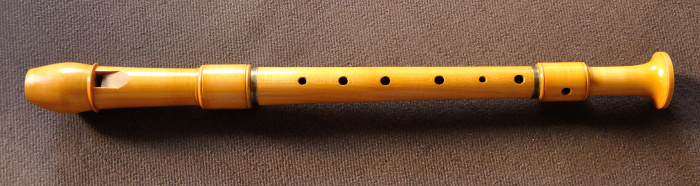
an alto (treble) recorder signed by Peter Harlan with German fingering (note the small size of hole n° 5)
German fingerings on the recorder
This system is not recommended nowadays and is not normally taught in music schools. It was invented in Germany by Peter Harlan in the 1920s to make it easier to play the semitone between the
3rd and 4th notes of the major scale in the recorder's fundamental key, by removing the fork fingering for F on a soprano (descant)
or tenor recorder, and for B flat on an alto or bass. This modification, obtained by reducing the diameter of hole n° 5 and enlarging hole n° 4,
makes the recorder diatonic when playing in c major on a soprano (descant) or tenor recorder, or in f major on an alto (treble) or bass recorder,
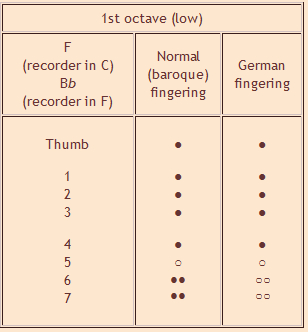
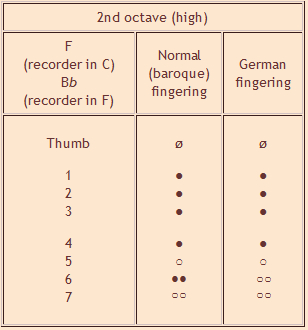
but playing in tune in other keys is impaired by hole sizes that no longer follow the logic of the instrument. The difference between the German and baroque systems for this note in both octaves can be seen in the charts below.
|
|
● = closed ○ = open ø = partially closed
Recorders with German fingerings are often made without double holes.